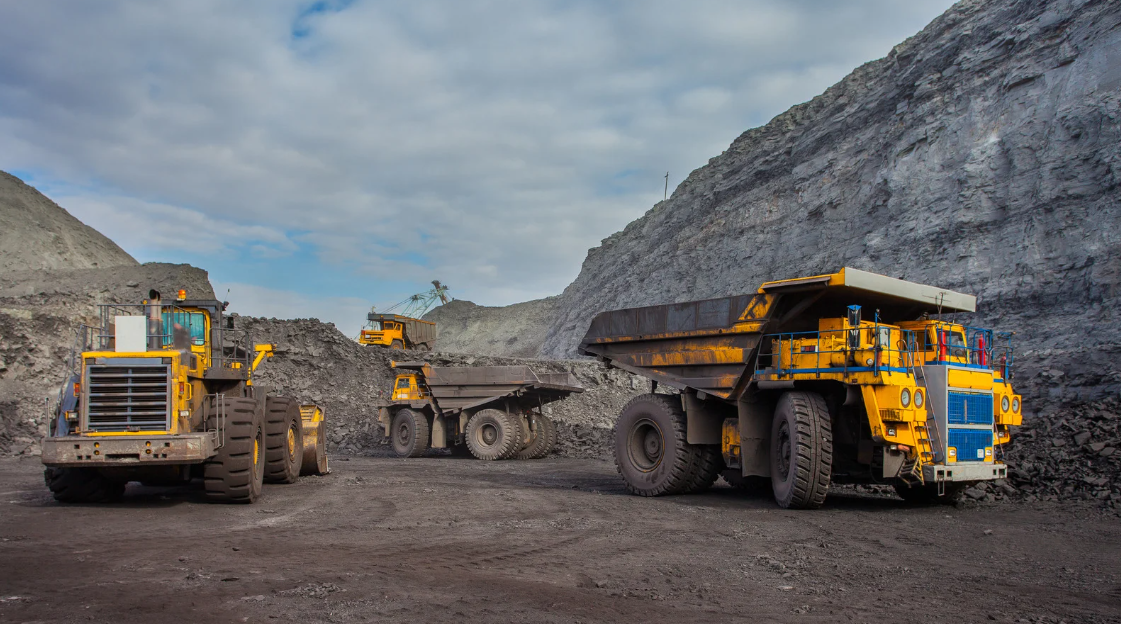
Tailings were created as the lowest-cost outlet for a plant’s reject stream, not as a future resource. Historic mills released gold in the form of fine particles, gold locked in sulphides, and gold that never dissolved in short or poorly conditioned cyanide circuits.
What recovery rates did historic plants achieve?
Recovery rates in older gold plants varied by era, and the gap between eras is large enough to matter for anyone assessing a dump today.
| Era | Typical technology | Approximate recovery |
|---|---|---|
| Pre-1950 | Gravity concentration and amalgamation | Below 60% |
| 1950 to 1980 | Early cyanidation | Roughly 65 to 75% |
| Post-1980 | Carbon-in-leach (CIL) | 75 to 85% |
Tailings generated before the post-1980 improvement were produced under the lower-recovery regimes in that table, which is exactly why they carry more residual gold today. Those recovery figures are metallurgical accounting numbers in the same sense described on how gold tailings are formed: they come from comparing head grade against tails grade, not from an estimate. A gap of even 10 to 25 percentage points in recovery, on a deposit producing 1 g/t of gold, translates directly into the ounces left in the tailings. That's also why Ghana's older tailings dams are often richer than comparable modern rejects.
Which gold did old plants systematically miss?
Historic plants routinely missed three gold types: coarse free gold that bypassed gravity, fine gold that was too small for roughers, and gold locked in sulphide minerals. Free gold could escape a simple grinding-gravity circuit, but most misses were fines and locked gold. Pre-1950 gravity and amalgamation plants add a further complication: many used mercury to capture fine free gold, so tailings from that era can carry residual mercury alongside the gold, which is a distinct legacy issue from the mercury contamination associated with modern artisanal mining and needs its own screening regardless of which era produced the dump.
Fine gold below 75 microns often did not report to concentrate and required either flotation or CIL to recover. Locked gold in pyrite or arsenopyrite was invisible to gravity and also insensitive to short cyanide contact times. Diagnostic leach testing is how a modern study tells these forms apart in a specific dump rather than assuming a generic mix, and those are the same gold forms that modern retreatment studies look for first.
How much gold does that leave in a typical dump?
A typical old tailings dump in Ghana can hold 0.3 to 1.5 g/t of gold, but the more important number is contained ounces. A 10-million-tonne dump at 0.7 g/t contains about 225,000 ounces of gold. If modern recovery reaches 75 to 85%, that is still 170,000 to 190,000 ounces of potential product in material that was previously considered waste.
The magnitude of that contained gold is why operators and investors ask whether the dump is a resource rather than simply a liability. It is also why the composition page on gold tailings composition is needed to understand which part of that gold is recoverable.
Why can modern plants recover what old ones couldn't?
Modern plants recover old tailings gold by using the right combination of methods for the right gold forms. Gravity circuits now use enhanced centrifugal concentrators, such as Knelson or Falcon-type units, that can recover fine free gold down to a size older jigs and sluices simply couldn't capture, combined with finer classification upstream. Flotation targets sulphide-bound gold, and carbon-in-leach recovers the remaining fine and surface-bound gold.
That is the hybrid logic at the core of tailings gold recovery methods: do not rely on a single method if the tailings contain several gold modes. Modern plants also use better grind control, cleaner reagents, and longer residence time, all of which were missing from the older designs.
Does every old tailings dump justify retreatment?
No. Not every dump justifies retreatment. The most important factors are residual grade, tonnage, moisture content, and whether the gold is recoverable in the right form, which is really the cut-off grade question worked through in more depth on tailings vs waste rock. A low-grade dump with poor water management or high contamination may still be more expensive to retreat than its contained gold can support.
The decision therefore depends on project economics, not just on the presence of old tailings. That said, the combination of historic plant inefficiency and Ghana’s long mining legacy means there are many dumps where the recoverable gold outweighs the retreatment cost.
For an investor or operator, the first practical step is to verify the dump through sampling and testwork rather than assume all old tailings are equal. That is the testwork-led path from the pillar page on gold tailings processing in Ghana.
How today's benchmarks compare
The realistic recovery rates a modern retreatment plant can achieve on old tailings, and the testable conditions that determine whether a given dump qualifies, are set out in more detail on whether gold can still be recovered from tailings.
Ghana's older mining districts as a case in point
Ghana's long-running mining districts, including established centers like Obuasi, illustrate this pattern at scale simply because they've been through more plant generations, and therefore more of the recovery gaps described above, than a newer mining area would have.
A global proof point
Commercial tailings retreatment at scale isn't a theoretical idea. Companies such as DRDGOLD in South Africa have built their entire business on reprocessing exactly this kind of historic material, which is the clearest evidence that the economics described on this page work in practice, not just on paper.