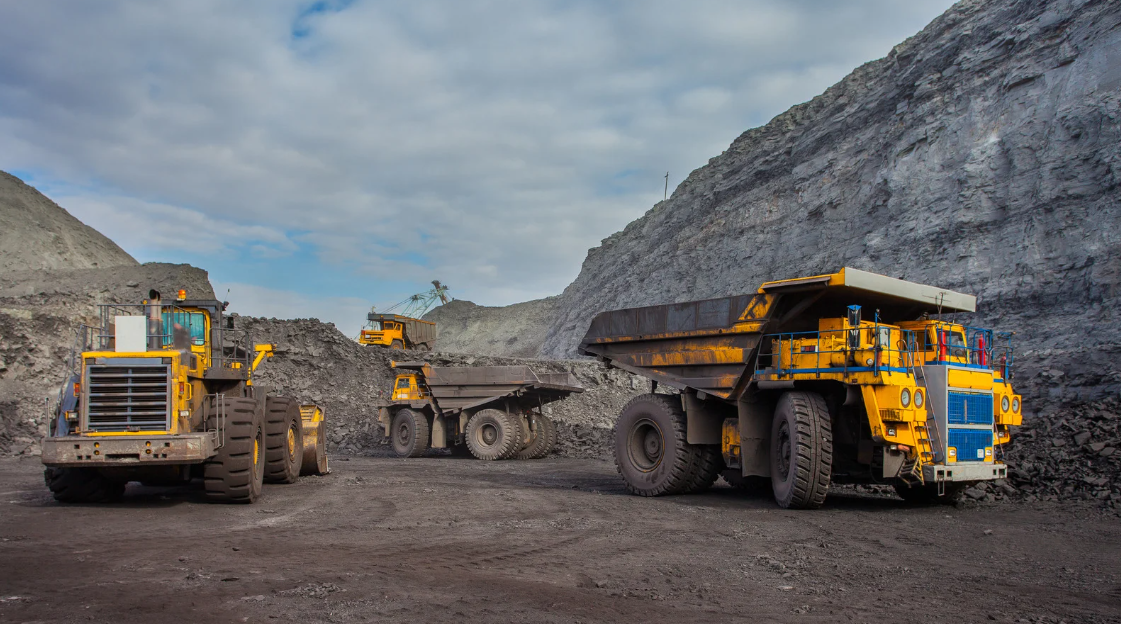
Gold tailings form at the end of the mine-to-plant process, not as an isolated waste stream someone decided to create. Ore is crushed, milled, conditioned, and treated, and whatever gold the plant fails to capture at each of those stages ends up in the material pumped to storage. Understanding that sequence matters because it's also a map of where a modern retreatment project should look first for recoverable value.
What happens to ore before it becomes tailings?
Ore is first crushed and ground to liberate gold particles from the surrounding rock, then the resulting slurry is classified so oversize material can be sent back for further grinding. Metallurgists specify how fine that grind needs to be as a P80 target, meaning the size at which 80% of particles pass through, and that single number does more to determine how much gold ends up liberated than almost any other design choice in the plant. Once the slurry is at the right size, it's conditioned and fed to gravity, flotation, or leach circuits, whichever combination the plant was designed around. The solids left after that recovery process are the tailings, and their properties reflect every decision made upstream: the grind size chosen, the circuit configuration, and how thoroughly each stage did its job.
Where in the process is gold lost?
Gold is lost at three points in particular: where particles are not fully liberated by grinding, where gravity circuits cannot capture fine values, and where the leach circuit doesn't get enough contact time to dissolve the gold present. Coarse grinding leaves gold trapped inside rock fragments that gravity and leaching never really get a chance at. Classification can send fine gold particles below roughly 75 microns straight past the gravity circuit, because they're too small for it to catch. Short or poorly conditioned cyanidation stages leave dissolvable gold undissolved simply because the reaction didn't run long enough. A plant actually quantifies this loss through its metallurgical balance: comparing the grade going into the plant (head grade) against the grade coming out in the tailings (tails grade) tells the operator exactly how much gold walked out the back door, which is the same number a retreatment study is trying to recover decades later. This is the same mechanism that explains why old tailings still contain gold, and it's really the reason this page exists: every tonne of tailings is a record of exactly where a plant's recovery fell short.
How are tailings transported and deposited?
Tailings are usually pumped as slurry from the plant to a tailings storage facility, where they build up as a continuous mass over the life of the mine. The deposition method chosen affects how that mass behaves for decades afterward, which matters directly to anyone assessing it for retreatment later.
| Deposition method | How it works | Effect on the material |
|---|---|---|
| Upstream | Each new layer is built on top of the previous one, set back toward the dam crest | Lower cost, but coarser and less stable over time |
| Downstream | Each new layer extends outward from the crest | More stable, higher construction cost |
| Centerline | A hybrid of upstream and downstream construction | Balances cost and stability |
| Filtered / dry stack | Water is removed before deposition, leaving a dense, stackable solid | Highest water recovery, easiest to rehandle later |
Upstream construction is also the method most associated with historic dam failures, which is why the Global Industry Standard on Tailings Management (GISTM) now pushes operators toward more conservative deposition methods and independent review for any facility, new or legacy, regardless of which method built it originally.
How have tailings changed as processing improved?
Tailings from older plants tended to be coarser, more variable, and richer in leftover gold, simply because the technology of the time recovered less of what was there. As processing improved through better grinding, flotation, and cyanidation, tailings became finer and lower grade, but far more consistent from one batch to the next. That's part of why older tailings dams often make more attractive retreatment targets today, even though they can also come with higher storage and stability challenges that need to be assessed alongside the grade.
Why do older plants' tailings hold more gold?
Older plants' tailings hold more gold because the three loss points above, coarse liberation, missed fines, and incomplete leaching, were all worse in earlier plant designs. Grinding circuits from decades ago produced coarser final products than modern circuits do, gravity equipment was less effective at capturing fine gold, and cyanidation practice hadn't yet developed the residence times and reagent control that later became standard. None of that was a mistake at the time; it was simply the limit of what the technology of the era could do. What it left behind, though, is exactly the resource that modern retreatment projects are built to recover.
What happens to this material next
Once tailings are in storage, retreating them means re-mining and feeding them back through a recovery circuit, the first stage described on gold processing plants for tailings.
The fine gold problem specifically
The fine gold that classification and gravity circuits routinely miss, generally anything below roughly 75 microns, is one of the main reasons a hybrid flowsheet, rather than gravity alone, is usually needed to retreat older material effectively. That threshold is also why two dams with the same head grade can need completely different flowsheets: one dominated by coarse missed gold responds well to gravity alone, while one dominated by fine missed gold needs flotation or leaching to do the real work.
Ghana's historic plants in context
Ghana's century of continuous gold production means this formation history has played out across many plants and eras, which is part of why the country carries such a large installed base of tailings, discussed in full on gold tailings processing in Ghana.