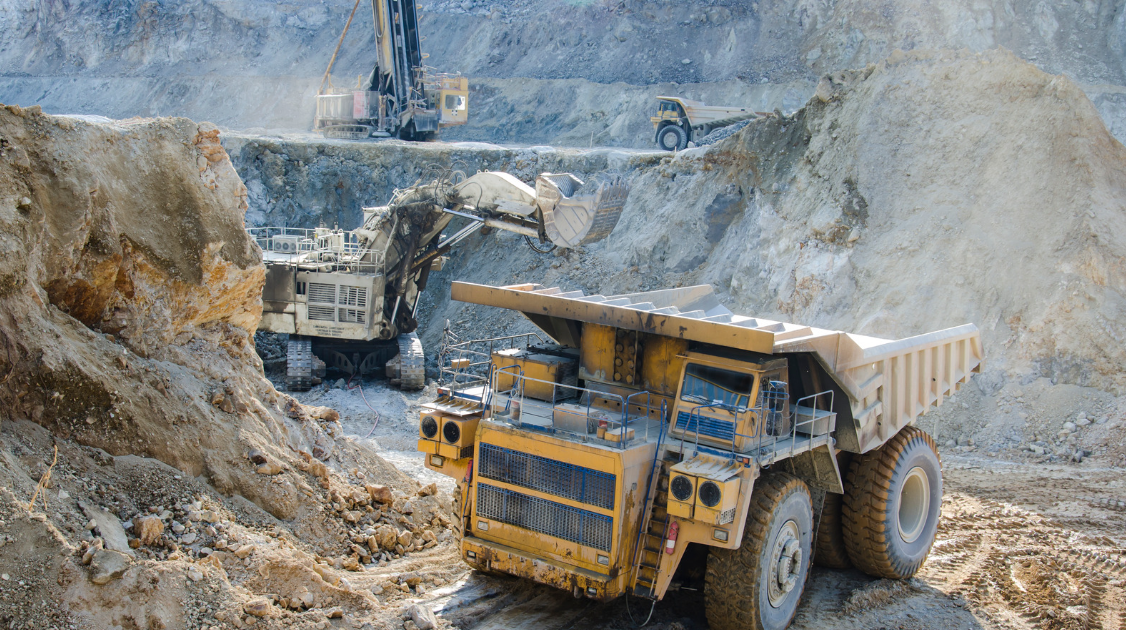
Hydraulic mining is the first physical step in the plant sequence described on gold processing plants for tailings, the step that turns a static dump of stored material back into a moving, processable slurry before anything else in the flowsheet can begin. It has a long history in mining generally, predating modern mineral processing by well over a century, and its application to tailings retreatment is a natural extension of a well-proven, simple technique to a material that suits it particularly well.
How does a monitor actually cut and move tailings material?
A monitor cuts and moves tailings material using a directed, high-pressure jet of water aimed at the dump face, eroding the material progressively as the jet undermines and washes down sections of the dump, with the loosened slurry then flowing by gravity, or assisted by additional water, into a collection sump positioned at the base of the working face. This is a fundamentally different re-mining approach from a fresh-rock operation, which is directly relevant to how gold tailings are formed: because tailings are already crushed and ground to a fine, unconsolidated state by the original milling process, no drilling or blasting is needed to break the material apart, only enough hydraulic force to mobilize what is already loose.
Why is this method suited specifically to tailings rather than hard rock?
Hydraulic mining suits tailings specifically because tailings arrive already broken down to a fine particle size by the historic milling process that created the dump in the first place, meaning the mechanical energy needed to move the material is dramatically lower than what a fresh-rock operation requires to break intact rock. Water alone, applied at sufficient pressure and volume, can do the entire job of dislodging and mobilizing tailings material that would take drilling, blasting, and crushing to achieve on unweathered rock, which is the central reason this method is standard practice for re-mining tailings dumps and essentially irrelevant to fresh-ore mining.
This same logic explains why hydraulic mining's capital and operating cost profile compares so favorably with fresh-ore mining methods more broadly, echoing the structural cost advantage tailings retreatment carries over new mining generally. Removing drilling, blasting, and primary crushing from the front of a project's process chain is a direct, quantifiable capital and operating cost saving, not merely a convenience.
What does a monitor actually consist of, and how is nozzle pressure chosen?
A monitor, in its modern form, is a large, steerable water cannon fed by a high-pressure pump system, with an adjustable nozzle that controls the jet's shape and reach and a mounting that lets an operator direct the jet precisely at the section of dump face being worked. Nozzle pressure and flow rate are matched to the specific material's cohesion and moisture content, since a dump that has cemented or compacted over years of storage needs more cutting force per unit of material moved than a looser, more recently deposited section of the same dump, meaning monitor settings are adjusted across a single dump's face as material characteristics vary rather than fixed at one setting throughout.
Modern monitors are frequently remotely or semi-automatically controlled, allowing an operator to direct the water jet from a safe distance rather than standing immediately adjacent to an actively eroding, potentially unstable dump face, a safety improvement over older manually steered equipment that also allows more precise, repeatable jet positioning across a long working shift.
What water volumes and recycling considerations does this method involve?
Hydraulic mining is a genuinely water-intensive method, since the water jet itself is both the cutting tool and the primary transport medium moving material into the collection sump, meaning total water demand per tonne of tailings re-mined is substantial compared with a mechanical excavation method that uses water only for downstream slurry transport. Recycling water from the plant's own thickener and tailings storage return-water circuit, rather than drawing continuously from a fresh source, is standard practice on a well-run operation, both for cost control and because a large-volume fresh-water draw sustained over a multi-year retreatment project is rarely practical or environmentally sound at scale.
Managing this water balance well requires coordinating monitor operation with the plant's overall water recovery capacity, since a monitor running faster than the plant's return-water system can supply risks either water shortage at the monitor or an imbalanced site-wide water inventory. This coordination is a genuine operational planning task, not an incidental detail, on any hydraulic re-mining operation running at meaningful scale.
Seasonal rainfall variation is a further practical consideration specific to Ghana's climate, where wet and dry seasons can shift both the natural water balance around a site and the moisture content of the tailings material itself, changing how much cutting force a given monitor setting achieves at different times of year. A re-mining plan that accounts for this seasonal variation, rather than assuming constant conditions year-round, produces more reliable production forecasting than one that does not.
What happens to the slurry once it leaves the dump face?
Slurry collected at the base of the working face is pumped or gravity-fed onward to feed preparation, the trommel and scrubber stage described on trommels, scrubbers and feed preparation, where oversize debris is screened out and clay-cemented clumps are broken apart before the material proceeds to gravity concentration and the rest of the flowsheet. The pumping and pipeline infrastructure that carries this slurry from the sump onward is its own dedicated engineering discipline, covered on slurry pumping and pipeline design.
Pulp density leaving the collection sump is itself a variable worth controlling deliberately rather than accepting whatever ratio the monitor and dump face happen to produce. A sump equipped to add or remove water before the slurry proceeds downstream gives an operator the ability to tune pulp density toward the range the rest of the plant, particularly the gravity and feed preparation stages, is actually designed to accept, rather than forcing downstream equipment to compensate for an uncontrolled feed density arriving directly from re-mining.
How is monitor re-mining sequenced across a large dump over a project's life?
Re-mining a large dump proceeds according to a mine plan that sequences which sections of the dump face are worked in what order, similar in principle to a mine plan for a fresh-ore pit, accounting for the dump's geometry, moisture content variation with depth, and any variation in grade or particle size distribution across the dump's volume. Working the dump systematically according to this plan, rather than cutting into it opportunistically, keeps re-mining production predictable and lets a project match its re-mining rate to the plant's actual processing capacity downstream.
Safety considerations specific to hydraulic re-mining
A monitor's high-pressure water jet and the undermined, potentially unstable dump face it creates both carry real workplace safety hazards distinct from those in a conventional excavation operation, and standard practice includes maintaining safe working distances, monitoring face stability continuously, and training operators specifically on hydraulic mining hazards rather than assuming general mining safety training covers this method's particular risks. Undercutting a face too aggressively can cause an unplanned collapse, which is why experienced operators work the face in controlled, incremental passes rather than attempting to remove large sections in a single cut.
How this connects to the historical formation of the dump itself
Hydraulic mining physically undoes, in a sense, the original tailings deposition process described on how gold tailings are formed, turning a static, settled dump back into the same kind of moving slurry the original plant once discharged, before that slurry is fed into a modern recovery circuit built to catch the gold the historic plant left behind.
Equipment sizing as part of overall plant capacity planning
The number and capacity of monitors a project installs is sized to match the re-mining rate the rest of the plant, feed preparation, gravity, and leach circuits, is built to process, since a re-mining rate that outpaces downstream capacity simply builds up an unprocessed slurry inventory, while a rate that lags behind starves the plant of feed. Balancing this rate across the whole flowsheet is a core part of overall plant capacity planning, not a decision made in isolation for the re-mining stage alone.