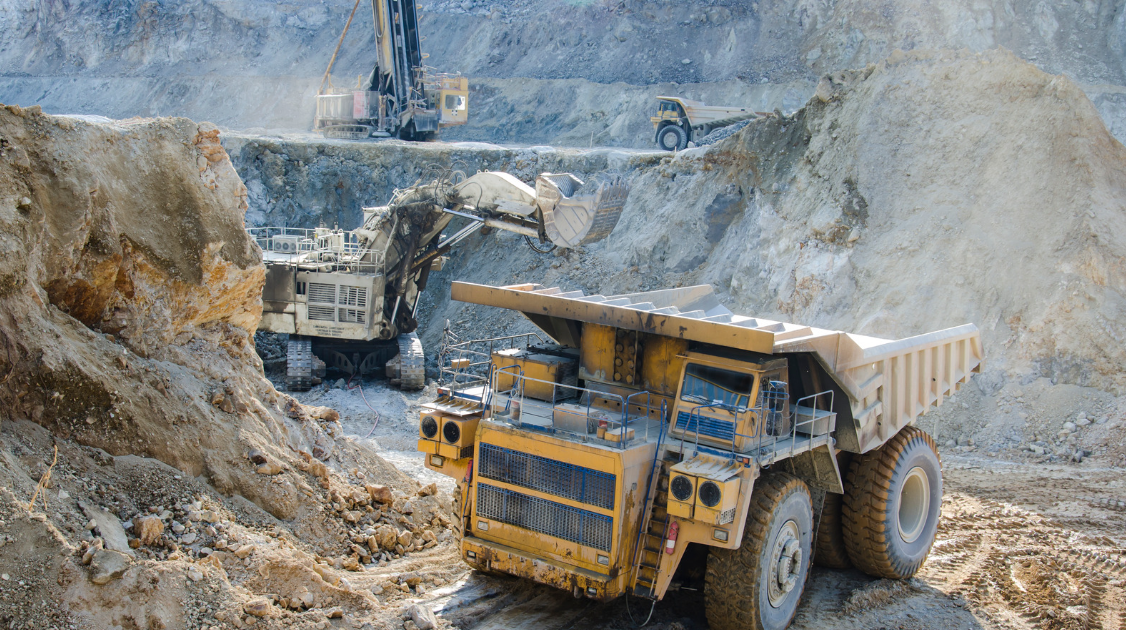
Containerized units push the modularity principle described on modular gold recovery plants to its smallest, most portable extreme, trading total throughput capacity for maximum relocatability and the ability to prove out a dump's economics before committing to larger, less mobile infrastructure. This mobility-for-throughput tradeoff makes containerized equipment a genuinely distinct category rather than simply a smaller version of a modular plant.
What does a containerized recovery unit actually contain?
A containerized recovery unit typically houses a scaled-down gravity stage, most often a small Knelson or Falcon unit given the equipment described elsewhere in this recovery methods set, along with the feed pumping, screening, and water handling needed to run it as a self-contained system. Some units extend further, adding a small leach and carbon adsorption circuit within additional containers, effectively packaging an entire miniature gravity-leach flowsheet into a footprint that can be loaded onto a standard flatbed truck or shipping container chassis for transport between sites.
Standard shipping container dimensions, typically twenty or forty feet in length, set a natural constraint on how a containerized unit's equipment is laid out, and manufacturers generally design around these standard footprints specifically because they are compatible with existing container-handling infrastructure, cranes, flatbed trailers, and port facilities, that already exists throughout the logistics industry. This standardization is part of what makes containerized units genuinely practical to relocate rather than merely theoretically portable.
When does a containerized unit make sense over a modular or fixed plant?
A containerized unit makes sense specifically for proving out a dump's economics before committing to larger capital, since it lets a project generate real, representative recovery and grade data from actual continuous operation rather than laboratory-scale testwork alone, at a fraction of the capital a modular or fixed plant would require. It also suits smaller or scattered tailings occurrences that individually do not justify fixed infrastructure, or genuinely mobile operations intending to work multiple sites sequentially, relocating the same unit from one dump to the next as each is worked through.
None of these use cases position a containerized unit as a substitute for full-scale infrastructure on a large, well-characterized resource; its role is deliberately smaller in scope, either as a bridge toward a larger investment decision or as the right-sized solution for a genuinely small or dispersed opportunity.
A containerized unit's lower capital commitment also makes it a comparatively accessible entry point for a new operator building initial track record and operating experience in Ghanaian tailings retreatment before scaling to a larger project, since the technical and operational lessons learned running a smaller unit carry forward directly to a subsequent larger installation using the same underlying gravity or gravity-leach principles.
What power and water does a containerized unit actually need to run?
A containerized gravity unit needs enough electrical supply to drive its centrifugal concentrator, feed pumps, and screening equipment, a modest load compared with a full-scale plant but still a real requirement that a genuinely remote or off-grid site needs to plan for, commonly through a diesel generator sized to the unit's specific draw. Water demand follows the same pattern as any gravity circuit, needed for fluidization and slurry transport, and a containerized unit typically recycles a share of its process water rather than drawing continuously from a fresh source, though total consumption still needs a reliable nearby water supply, whether from a natural source, a borehole, or trucked-in supply for a genuinely water-scarce location.
Because a containerized unit is often deployed to sites with less-developed infrastructure than a project's eventual full-scale plant location, planning power and water logistics for the specific pilot site, rather than assuming grid connection and municipal water will be available, is a standard part of preparing for containerized deployment.
What throughput and recovery can a project realistically expect from this scale?
Containerized units process meaningfully lower tonnage per hour than a modular or fixed plant, generally sized for pilot-scale or small continuous operations rather than the throughput a full commercial retreatment project would eventually target. Recovery performance on the equipment itself, a scaled-down Knelson or Falcon unit and, where present, a small leach circuit, follows the same GRG-dependent and testwork-driven principles described throughout this recovery methods set; the unit's small scale does not change the underlying metallurgy, only the total tonnage it can process in a given period.
This positions a containerized unit honestly as a proving and bridging tool rather than a full-scale production substitute. A project using one to validate a dump's economics should expect its data to translate the underlying recovery percentages to full scale, not the absolute tonnage or ounce totals a containerized unit itself can produce in isolation.
What are the practical logistics of relocating a containerized unit?
Relocating a containerized unit still requires power and water hookup at each new site, since the container itself provides the process equipment but not an independent power or water source, along with a suitable foundation or pad even for equipment marketed as fully mobile, since vibration and load distribution from operating equipment need a stable base regardless of the unit's portability. Transport permitting for moving heavy, oversized containerized equipment between sites on Ghanaian roads is also a real logistical and scheduling consideration that a project should plan for explicitly rather than treating relocation as instantaneous.
Concentrate and tailings handling at each new site is a further logistical detail worth planning ahead of relocation rather than improvising on arrival. A containerized unit still produces a gold-bearing concentrate that needs secure handling, transport, and either on-site cleaning or transport to a central processing point, and its tailings output still needs a suitable, permitted discharge or storage arrangement at each site the unit visits, exactly the same environmental and security obligations a fixed plant carries, just repeated at every relocation rather than established once.
What staffing and operating skill does a containerized unit require?
A containerized gravity or gravity-leach unit still needs trained operators familiar with the specific equipment inside it, gravity concentrator tuning, feed density control, and, where a leach circuit is included, the same cyanide handling and process control discipline a full-scale leach circuit requires. Its smaller scale does not reduce the technical skill needed to run it correctly; if anything, a single small unit often has less built-in redundancy or automated process control than a full-scale plant, placing more of the burden on operator skill and attentiveness to keep performance consistent across relocations and varying feed conditions from one site to the next.
Does a containerized unit ever graduate into a permanent installation?
A common progression sees a pilot containerized unit prove out a dump's economics first, generating the operating data that then informs the design of a later modular or fixed plant sized for full commercial throughput, described on modular gold recovery plants and gold processing plants for tailings. The containerized unit itself is typically then relocated to prove out the next opportunity rather than being scaled up in place.
How this fits the broader mobility and scale spectrum
Containerized units sit at the most portable end of a spectrum running from fixed plants through modular plants to fully containerized equipment, each trading some throughput capacity or site-specific optimization for greater speed of deployment and relocation flexibility.
Why this scale suits early-stage investor engagement
A containerized pilot unit gives a prospective investor or partner tangible, verifiable operating data, real recovered gold from real continuous operation on the specific dump in question, well before a full-scale plant decision requires major capital commitment, making it a genuinely useful de-risking step in an investment conversation rather than only an engineering curiosity.
Why containerized data still needs the same testwork foundation as any other scale
Operating a containerized unit does not replace the GRG, particle size, and diagnostic leach testwork described elsewhere in this recovery methods set; it complements that testwork with real continuous-operation data. A project that skips laboratory testwork and relies solely on early containerized unit results risks drawing conclusions from a small, potentially unrepresentative section of a larger, more variable dump.