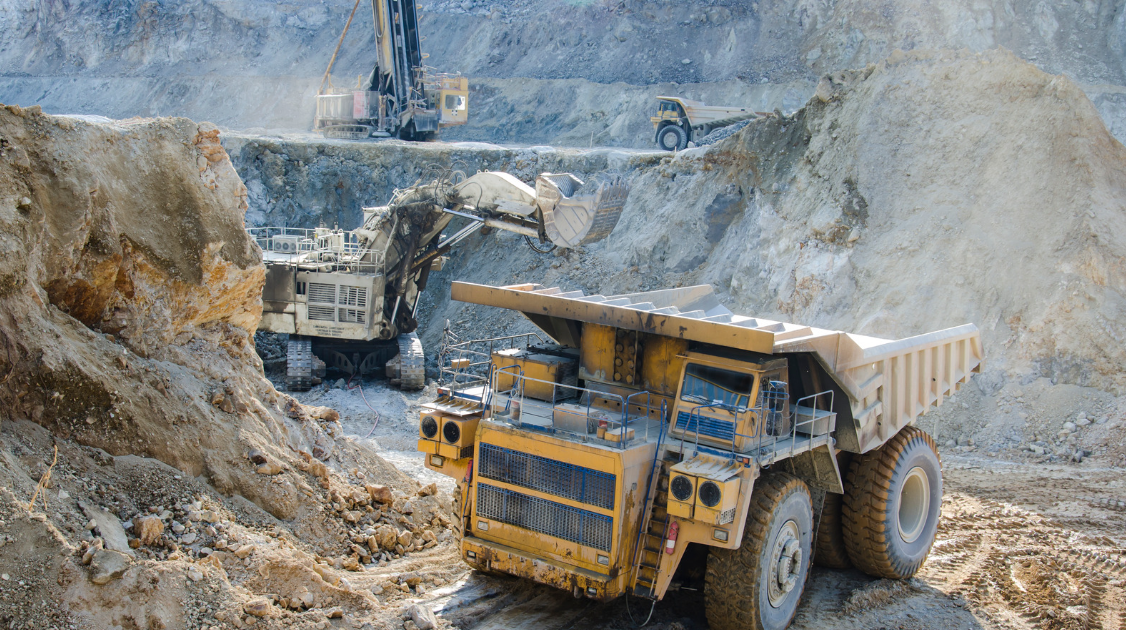
Ghana is a leading destination for mining investment because it combines a large, well-mapped gold endowment with decades of continuous commercial production, established infrastructure, and a mining-specific legal framework that foreign investors already know how to work within. Capital enters through one of three routes: mineral-rights acquisition, joint ventures, or project-level financing. Tailings retreatment increasingly sits alongside new mining as a fourth, lower-risk way in, because it starts from a deposit that is already defined rather than one still waiting to be found.
Why does Ghana lead African mining?
Ghana leads African mining because it pairs a large, well-characterized gold endowment with an operating history measured in decades rather than years. That history has built a base of local mining services, contractors, and skilled labor that a new entrant can draw on immediately rather than import. A developed road, power, and port network connecting the main mining regions to export routes further lowers the logistics cost of getting a project from discovery to production compared with frontier jurisdictions that lack that infrastructure.
What legal framework governs mining investment?
Mining investment in Ghana is governed primarily by the Minerals and Mining Act, which sets out how mineral rights are granted, what royalties and taxes apply, and what environmental and community obligations attach to a license, and it's administered through the Minerals Commission, with the Ghana Investment Promotion Centre handling investor registration for the broader business. Foreign investors can hold mineral rights directly, through a joint venture with a Ghanaian partner, or through a lease structure, and every route carries local-content and community-development requirements that a project's legal and technical teams need to plan for from the outset. One caveat: specific royalty rates, tax rates, and any recent amendments to the Act should be confirmed against a current official source before being quoted to an investor, since mining fiscal terms change with government budgets.
What structures do foreign investors use?
Foreign investors typically enter Ghana's mining sector through one of three structures: direct acquisition of mineral rights, a joint venture with a local partner, or project-level financing against a specific, already-defined asset. A fourth structure, streaming or royalty financing, where a financier provides upfront capital in exchange for a share of future production or revenue rather than equity, is also common in mining generally and can suit a well-defined tailings project, since the financier is underwriting a known deposit rather than exploration risk. Tailings retreatment projects are usually the easiest of the three primary structures to finance at the project level, because the deposit is already sampled and sitting on known ground. The financing question becomes "what will this plant cost and recover," not "will we find anything," which is a fundamentally different risk profile for a lender or partner to underwrite.
What returns do Ghana mining investments generate?
Returns in Ghana's mining sector vary by project type and commodity, but they are ultimately driven by grade, recovery, throughput, and capital intensity: the same four inputs that determine the return on gold tailings processing in Ghana specifically. Tailings retreatment projects tend to show a faster payback than greenfield mines because the reduced capital requirement (no mining or primary crushing) shortens the time between first capital spent and first gold produced, even where the residual grade is lower than a primary ore body. A fair comparison between a greenfield project's IRR and a retreatment project's IRR has to normalize for that grade difference explicitly. Otherwise a lower headline grade on the tailings side can look like a weaker project when the actual capital efficiency argument runs the other way.
What are the risks and how are they managed?
The main risks in Ghanaian mining investment are geological uncertainty, regulatory change, and environmental or community compliance failures. These are managed through independent technical due diligence, experienced local legal and community-relations advisory, and a project design that treats environmental and closure planning as a cost of the project rather than an afterthought. Ghana's status as an implementing country of the Extractive Industries Transparency Initiative (EITI) is a relevant governance signal here, since it means production and revenue data get published and cross-checked, which gives outside investors an independent reference point rather than relying solely on a project's own disclosures. Tailings projects carry meaningfully lower geological risk than greenfield exploration because the material is already physically present and can be directly sampled, rather than inferred from indirect exploration data.
Why tailings projects specifically?
Tailings projects are attractive within Ghana's investment landscape because they need less upfront mining capital and can reuse processing infrastructure that already exists near the deposit. That's the same thesis set out in full on gold tailings processing in Ghana. They also carry a cleaner environmental narrative than a new pit: retreatment removes a legacy waste liability instead of creating new land disturbance, which increasingly matters to investors who have to answer for the ESG profile of their capital.
How does a first-time investor actually start in Ghana?
A first-time investor starts with a defined, sequential process rather than an open-ended search:
- Technical screening: review available sample data, historic production records, or tailings volumes for the asset in question, including any existing fire assay or mineral liberation analysis (QEMSCAN) results that speak to grade and deportment.
- Local advisory engagement: retain Ghana-based legal and technical counsel who can navigate the Minerals and Mining Act and community requirements first-hand.
- Site visit and independent due diligence: verify the desktop review against a physical inspection of the asset and its infrastructure.
- Permitting and structuring: confirm the mineral right or lease structure and begin the environmental permitting track in parallel with technical work.
- Bankable package assembly: combine the technical, legal, and financial workstreams into a package a lender or partner can actually underwrite.
Taxes and royalties: what to confirm before committing capital
Ghana's mining fiscal regime applies royalties and corporate tax to production under the Minerals and Mining Act, alongside local-content and community-development obligations. Because rates and thresholds can change with government budgets, an investor should treat any specific royalty or tax percentage as something to verify against a current official source at the time of the deal, not something to take from a general reference.
How Ghana compares within West Africa
Ghana is one of several established West African gold jurisdictions alongside neighbors such as Mali, Burkina Faso, and Cote d'Ivoire, and investors evaluating Ghana typically weigh it against those alternatives on production track record, infrastructure, and regulatory stability rather than on geology alone. A full country-by-country comparison, including how each jurisdiction's fiscal and security environment has evolved, is a separate, dedicated topic on its own rather than a claim to make in passing here.
The ESG lens investors apply
Investors increasingly screen mining opportunities on their ESG profile as well as their economics, and tailings retreatment tends to score well on that screen because it addresses an existing environmental liability rather than creating a new one. The underlying framework for that evaluation is set out on what sustainable mining actually means.
Evaluate a mining investment in Ghana
Send us the asset or opportunity you're evaluating and we'll help scope the technical and commercial due diligence. We're also building a due-diligence checklist for Ghana mining investment. Tell us you'd like early access and we'll send it as soon as it publishes.
Start an investment inquiry