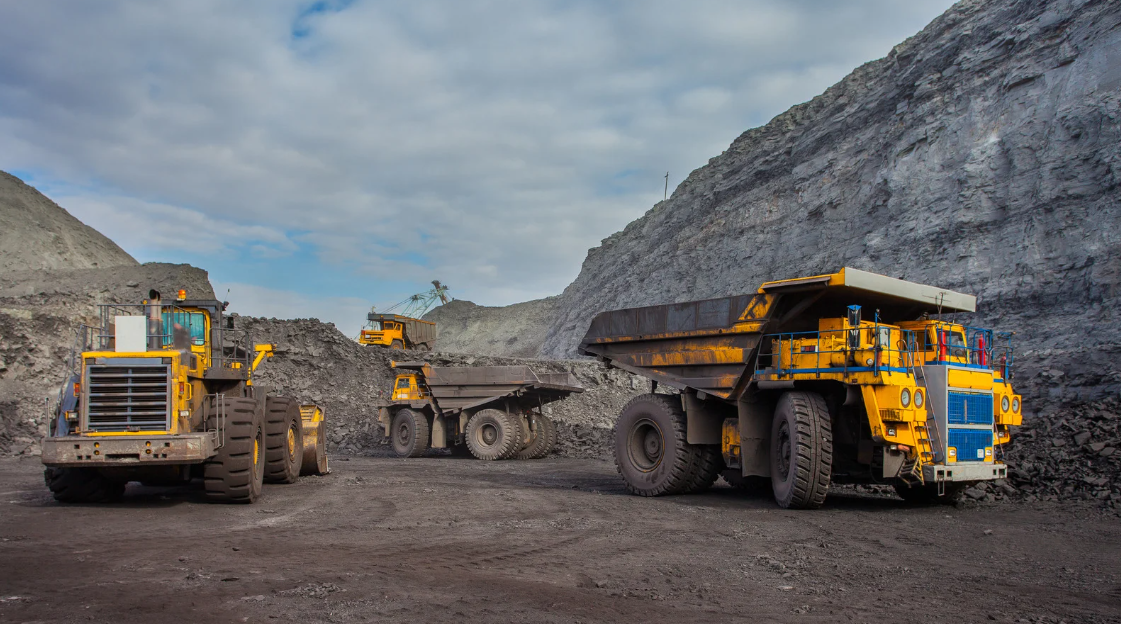
Heap leaching is the third leaching configuration covered in this recovery methods set, alongside carbon-in-leach and carbon-in-pulp, and it differs from both in the most fundamental way possible: the material never enters an agitated tank at all. Instead, it sits static on a lined pad while solution percolates through it slowly under gravity, a genuinely different engineering approach with its own distinct set of requirements and tradeoffs. It is a proven, widely used technology in the broader gold industry, though one that suits a narrower band of tailings feed characteristics than tank leaching does.
How does heap leaching physically differ from tank leaching (CIL/CIP)?
Heap leaching stacks crushed or agglomerated material in a static heap on an impermeable lined pad, then irrigates the heap surface with cyanide solution that percolates down through the material by gravity alone, collecting as pregnant solution at the base of the pad for recovery. Tank leaching, by contrast, agitates the material continuously in a series of tanks over a residence time measured in hours to a few days. Heap leaching's residence time runs weeks to months instead, a dramatically longer timeframe that trades speed for a much lower capital and operating cost structure, since a heap needs no tanks, no agitators, and no continuous mechanical energy input beyond the solution pumping and irrigation system itself.
Why does tailings material often need agglomeration before heap leaching?
Fine tailings particles can blind a heap's permeability, packing together tightly enough that solution cannot percolate through the material evenly, which is exactly the failure mode agglomeration is designed to prevent. Agglomeration binds fine particles into larger, stable granules, typically using cement or lime as a binding agent mixed with the material before stacking, creating enough open pore space between granules for irrigation solution to flow through freely rather than pooling on the surface or channeling through a few preferential paths while bypassing the bulk of the heap.
Tailings present a genuinely harder agglomeration challenge than fresh crushed ore in many cases, because tailings are already fine by nature, often finer than the crushed product a fresh-ore heap leach operation would stack, and years of storage can leave tailings material carrying clay content that resists forming stable granules even with binding agent added. Agglomeration testwork on the specific tailings material in question, not an assumption that standard fresh-ore agglomeration recipes will transfer directly, is what determines whether a given tailings stream can actually be heap leached at all.
How is a heap leach pad actually built?
A heap leach pad starts with an engineered, sloped base lined with a low-permeability synthetic liner, commonly high-density polyethylene, designed to prevent any leach solution from seeping into the ground beneath the heap. A drainage layer above the liner collects pregnant solution and channels it toward collection ponds, and the pad itself is typically constructed in successive lifts, with agglomerated material stacked in layers of a few meters at a time rather than as one single enormous pile, allowing irrigation and solution collection to begin on completed lifts even while later lifts are still being built and stacked.
Solution is applied to the heap surface through drip irrigation lines or sprinklers, distributed evenly across the top of each lift to encourage uniform percolation rather than channeled flow, and the irrigation rate itself is a carefully managed variable, since too rapid an application rate can overwhelm the heap's drainage capacity and cause solution to pond on the surface, while too slow a rate extends the already-long leach cycle further without a corresponding recovery benefit.
When is heap leaching actually viable on tailings?
Heap leaching favors lower-grade, larger-tonnage tailings material where the capital cost of a full tank leaching circuit is not justified by the value of the gold present, since heap leaching's much lower capital cost per tonne of capacity makes it economic at grades that would not support agitated tank leaching. It is a poor fit for very fine, clay-rich material that fails agglomeration testwork, since a heap that cannot maintain adequate permeability will never achieve acceptable recovery regardless of how long solution is applied to it.
This means heap leaching's viability on a specific dump is a genuine testwork question, not a default assumption in either direction. A large, low-grade tailings resource with material that agglomerates well is a strong heap leach candidate; a smaller, higher-grade dump, or one with feed that fails agglomeration testing, is generally better served by tank leaching despite its higher capital cost, since tank leaching does not depend on the material's physical permeability the way a heap does.
Column leach testwork, running representative agglomerated samples through laboratory-scale columns that simulate a heap's percolation behavior over weeks, is the standard way this viability question gets answered before committing to full-scale pad construction. A column test measures both achievable recovery and the leach kinetics curve over time, giving a project real data on how long a full-scale heap would actually need to run and what recovery ceiling it should expect, rather than relying on generic industry figures from unrelated ore types.
How does recovery and timeline compare to tank leaching?
Heap leaching typically achieves lower overall gold recovery than tank leaching on the same material, because the much shorter effective contact time per unit of solution flow and the physical limits of solution percolation through a heap mean some gold that a tank's longer, more thoroughly agitated residence time would reach simply never gets fully contacted in a heap. Heap leaching also takes dramatically longer to reach that lower recovery ceiling, weeks to months rather than hours to days, which extends the time before a project sees its gold converted into revenue.
Neither of these differences makes heap leaching technically inferior; they make it a different economic trade. Lower capital cost and lower operating complexity are exchanged for lower recovery and a longer cash conversion cycle, and which side of that trade suits a specific project depends on the size and grade of the resource, the cost of capital, and how urgently a project needs early cash flow versus maximum total recovery.
A useful way to frame this trade for an investor is total project net present value rather than recovery percentage alone. A lower-recovery, lower-capital heap leach project processing a very large tonnage can, in the right circumstances, deliver comparable or superior overall project economics to a higher-recovery tank leach project sized for a smaller resource, once the full capital, operating cost, and cash-flow timing differences are modeled properly rather than judged on recovery percentage in isolation.
Does heap leaching change how gold is finally recovered from solution?
Pregnant solution collected from the base of a heap still needs gold recovered from it, typically through carbon adsorption in dedicated columns, functionally similar in principle to the carbon adsorption stage in a CIL or CIP tank circuit, though configured for a clarified solution stream rather than a slurry. The loaded carbon from a heap leach operation then proceeds through the same elution and electrowinning steps described elsewhere in this recovery methods set.
How this compares economically to the combined gravity-leach flowsheets covered elsewhere
Heap leaching is generally considered as an alternative to, rather than a component within, the combined gravity-plus-tank-leach flowsheets described on combined gravity-leach flowsheets, since a project typically commits to one leaching architecture or the other for a given tonnage rather than mixing both approaches on the same material stream. A gravity stage ahead of a heap leach circuit remains worthwhile regardless, capturing coarse free gold cheaply before the much longer heap leach cycle even begins.
Environmental and permitting considerations specific to heap leaching
A heap leach pad requires its own engineered liner system to prevent solution seepage into groundwater, along with solution management infrastructure to handle irrigation, collection, and eventual heap rinsing and closure once leaching is complete. These requirements are a genuine part of a heap leach project's capital cost and permitting timeline, and they deserve the same attention in a feasibility study as the metallurgical recovery assumptions themselves.
Heap closure and rinsing at the end of a leach cycle
A spent heap is not simply abandoned once irrigation stops; it typically requires a rinsing period to flush residual cyanide from the material before the pad can be closed and reclaimed, following the same cyanide management principles applied to tank leach detoxification elsewhere on this site. Planning and budgeting for this closure phase from the outset, rather than treating it as an afterthought once active leaching ends, is part of responsible heap leach operation.